Naturpark Schwarzwald
Mitte/Nord


Nature and Landscape

Protecting and enjoying our heritage


In spite of all human intervention, the Black Forest is still one of the few remaining contiguous forest areas in Germany. It derives its name from the extensive, near-natural dark forest consisting of a mix of deciduous and coniferous trees, among them the characteristic silver fir.

These often wild woodlands are found in the centre of the nature park. They are the home of a large number of animal species such as the red deer, the fallow deer, the wild boar, but also of rarer species such as the common raven, the three-toed woodpecker, the pygmy owl or the wood grouse, the characteristic bird of the Black Forest. There are even some lone lynx roaming the forest again. A lot is done to make sure that they have a future in the Black Forest.

Courtship behaviour of the wood grouse


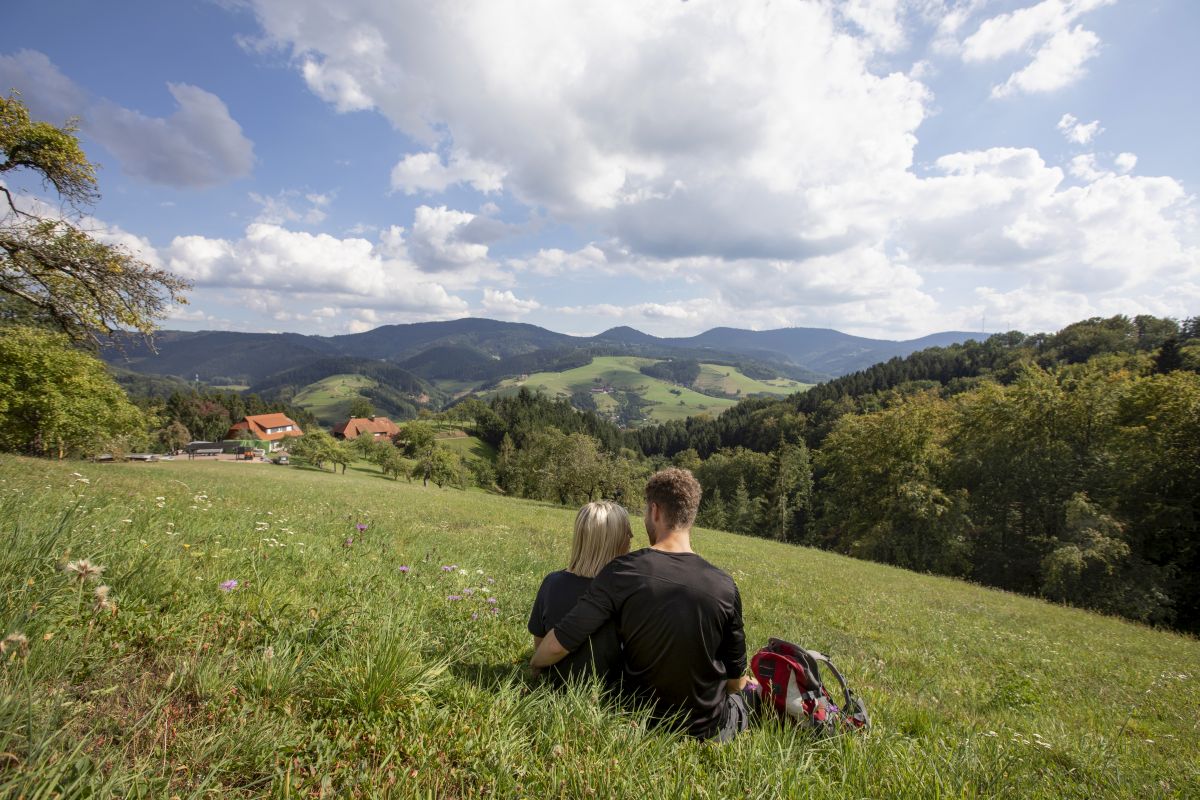
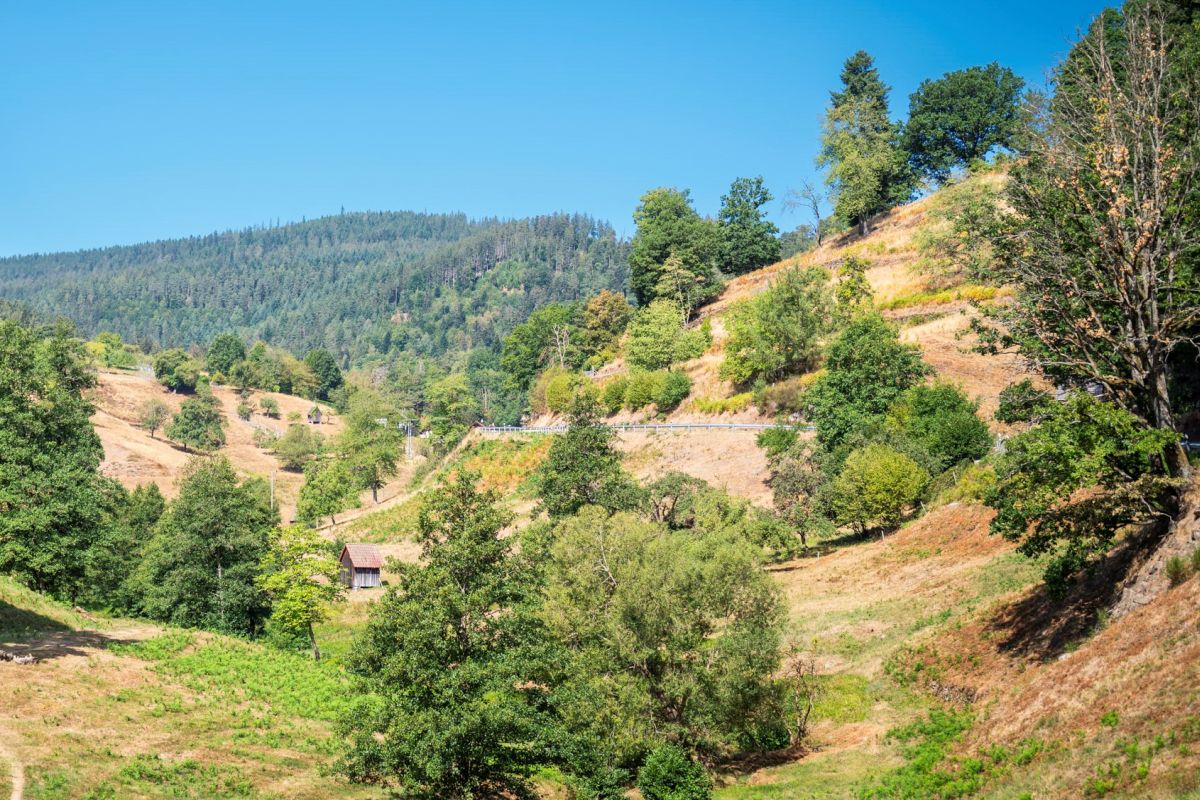
Other characteristic features of the Black Forest landscape are its open spaces, meadows and pastures. Human activity has created a typical cultivated landscape. Meadow valleys, mountain heaths and the typical fruit orchards of the promontory hills or the region around the town of Calw are characteristic for this landscape.
Protecting nature while making it accessible for people to enjoy – this is one of the main aims of the nature park, giving direction and information to visitors being a key task.


Habitats which are particularly valuable because they are home to a large number of endangered animal and plant species are, for example:

        - moors and moor forests,
        - cirque lakes - the dark eyes of the Black Forest,
        - mountain heaths created by forest clearing and grazing.

In addition, there are a whole range of rare biotopes such as marsh meadows, springs and river environments to be found.

Many of these habitats are especially protected by their status as nature reserves. Large nature reserves have, for example, been created between the mountains Hornisgrinde and Kniebis to protect the heath landscape. The moors that are still intact and home, for example, to sundew and cotton grass, such as the moor at Kaltenbronn - one of the larges moors in central Europe - have been designated as nature reserves.

View onto the Huzenbacher See, one of the typical ‘eyes’ of the Black Forest


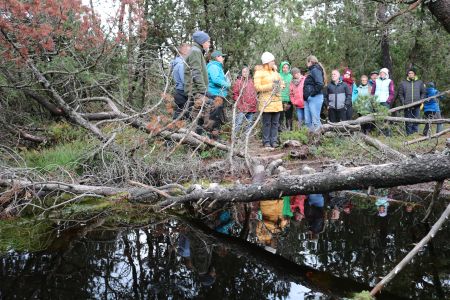
These biotopes are highly sensitive, the species living in them often very susceptible to disturbances. Special measures are necessary for their protection, sometimes in the form of restrictions for visitors. Nevertheless it is possible to experience these areas during informative guided tours or by walking along one of the numerous nature trails such as the "Grindenlehrpfad" (heath nature trail) on the Hornisgrinde or the plank walkway across the "Wildsee" moor at Kaltenbronn.

04.02.12
http://en.naturparkschwarzwald.de/natur-landschaft/natur-_und_landschaft
Contact    Sitemap    Publishing details    Home